

The Open Doors Exhibit Gallery
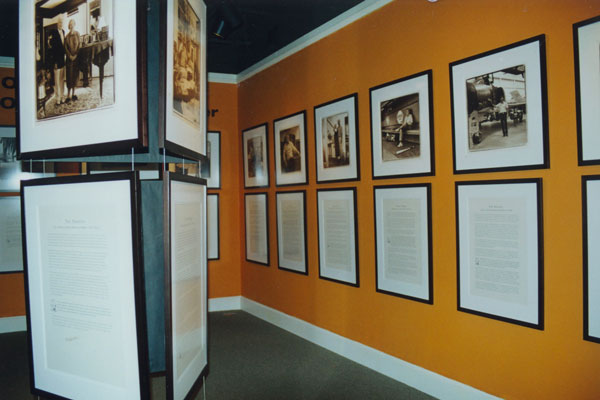
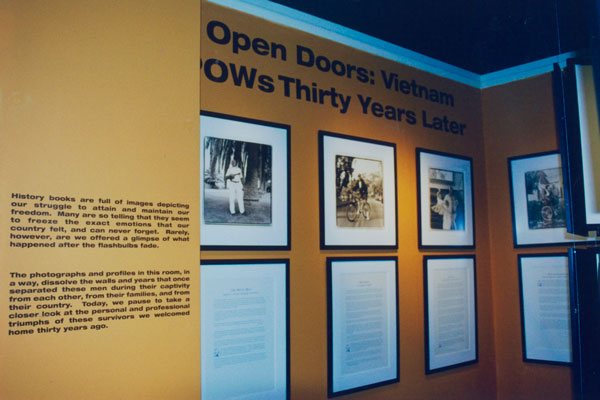
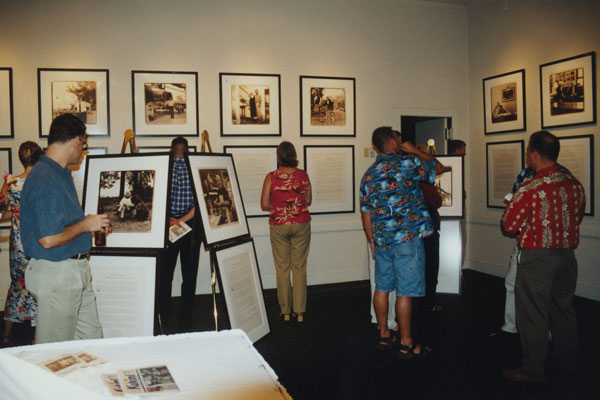
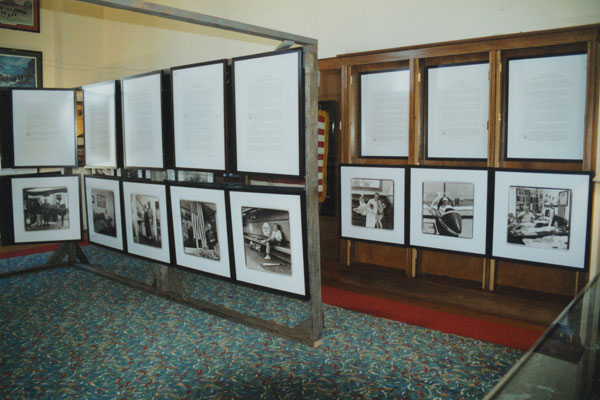
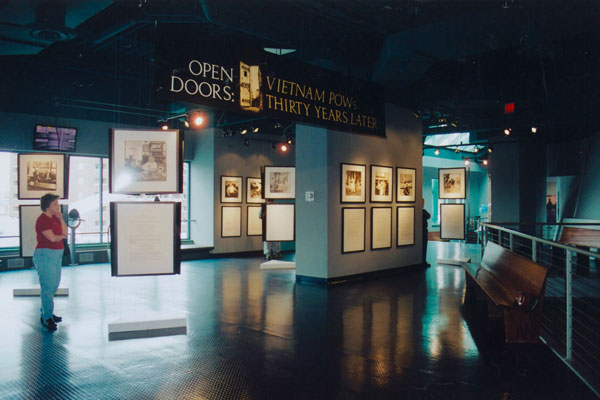
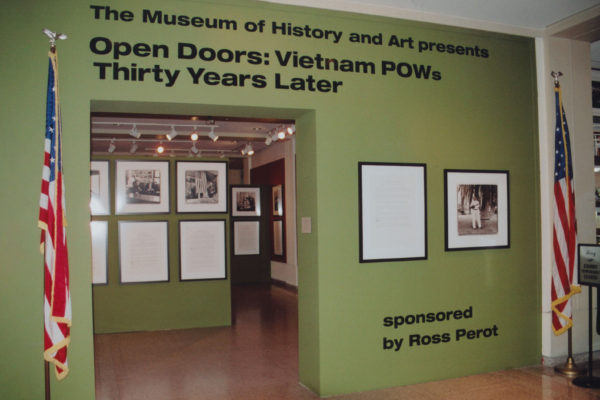
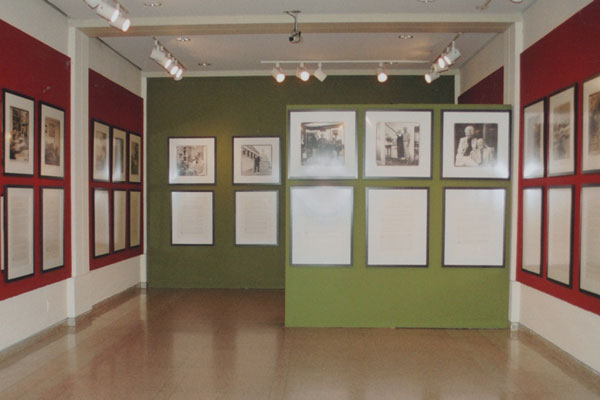
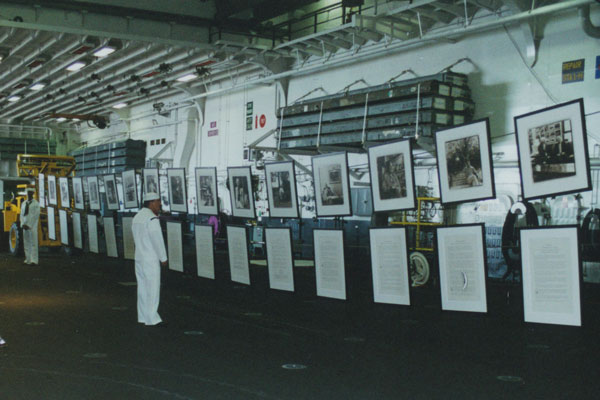
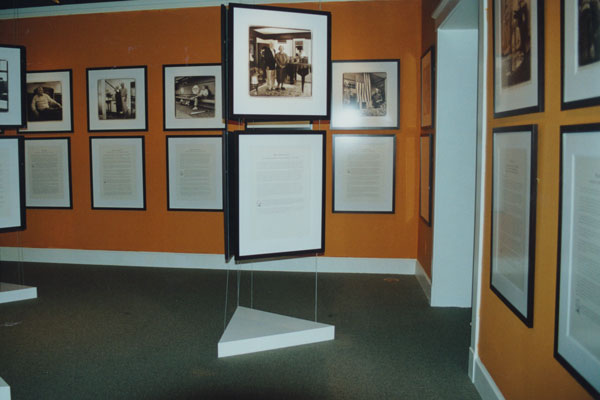
This exhibit of 30 sepia-toned, black and white photographic portraits and accompanying, written profiles is intended to capture these men who were tested like few people of subsequent generations have. The goal of this writer/photographer team was to capture the subjects’ personalities with visual images and written profiles that add verbal color, context and quotes. It was also intended to defy the lingering, negative stereotype of Vietnam veterans.
Separately, the profile and portrait give the observer a glimpse at a man. Together, they give insight into how he ticks, how he thinks and how he lives. Seeing Navy Captain Ev Southwick laughing and playing the ukulele offers up a visual image of a flirtatious, playful, fun-loving man. However, his profile reveals a much more intimate sense at how laughter sustained him through three divorces and a brain aneurysm. Not a deeply religious man, he used laughter as a spiritual release and the photo captured his own personal therapy in action.
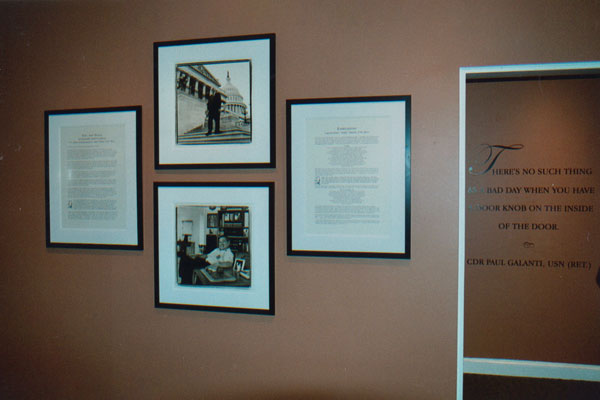
“Open Doors: Vietnam POWs Thirty Years Later” suggests hope, opportunity and second chances—a testament to the sheer strength of the human spirit and the power of human will. It reinforces the poignant quote made by Navy Commander Paul Galanti: “There’s no such thing as a bad day when you have a door knob on the inside of the door.”
The exhibit is now on permanent display at the corporate headquarters of CACI International, Inc. in Arlington, Virginia.
The Message
Men who grew up too young to fight in World War II saw their fathers tested physically and mentally by war. This generation of men had a tremendous sense of faith instilled in them at a very early age—faith in the unwavering loyalty and indomitable bonds of the nuclear family, faith in their government and faith in their country.
The Vietnam conflict shattered that faith for a generation of youth, but mostly for those who did not serve in uniform. For the aviators captured and held as POWs, time stood still. For the most part, these men did not experience the unrest, the cultural and spiritual conflict our country witnessed during that tumultuous season. They never lost their faith in our system, but clung to it—some might say naively. Regardless, it sustained them and empowered them.
Aviators are known for pushing the limits of physics and for cheating fate. They signed up for Vietnam to be tested. In their profession, they couldn’t afford to be ambivalent, nor to lose their convictions.
What happened when their dignity and independence were stripped away in a prison in North Vietnam? They survived.
Collectively, they endured out of a fear of shame. They felt an innate sense of obligation to do what’s right in the eyes of their fellow prisoners and to show honor to their country. It was never a solitary struggle, as each of them supported and validated the others. It constantly motivated them.
Perhaps that is what is missing in younger generations—the fear of shame, the sense of sacrifice as the ultimate grace.
Some prisoners or victims of unfortunate fates wallow in self-pity, some reflect on their lives and opportunities lost. Some lose their faith; some gain a renewed sense of spirituality. For those whose fate dictated that they spend precious personal and professional years in torturous isolation in North Vietnam, they had two choices: self-destruction or a search of their inner core and a beseeching of their Maker for the patience to tolerate their captors and simply endure. Get through each day, one day at a time. Get out mentally and physically intact. Return with their names and reputations whole.
Most POWs from the Vietnam era do not brood on their fortunes or misfortunes as a result of the conflict and their imprisonment. Few wallow in the “What ifs?” of their lives. Is this a particularly masculine trait? Can it be attributed to military training? Did it play a significant role in their mental health and in the resurrection of their lives upon their return? What is it about the will of these men that make them so extraordinary?
For these men were not given celebrity treatment by today’s standards. They weren’t given book deals or movie deals or publicists or a million dollars. Rather, they were asked to resume their roles as husbands and fathers and to salvage their careers. Some families survived; others broke apart. But the men didn’t. Most flourished. None of them would claim to be perfect, but they refuse to be bitter and they take great pride in their individual accomplishments. Most relish life, for they know that God understands them intimately—and that life always presents new doors of opportunity to open. Peel away the layers of masculinity and you’ll find strong fiber at their core. They don’t want pity; they don’t want help. Take a look at where life has taken them … or, more appropriately, where they’ve taken their lives.
-Taylor Baldwin Kiland
The Videos
Captain C. Everett Southwick, USN (Ret.)
“Having continued his military career in the Navy’s Office of Legislative Affairs until retirement in 1976, Captain Southwick continued his service to the country as a director of congressional relations for two major international corporations, and, later, was appointed deputy assistant administrator for congressional relations at NASA. Today Captain Southwick enjoys his game of golf and fishing trips to Alaska.”
Colonel George E. “Bud” Day, USAF (Ret.)
“Bud and Doris are fighting the cause of his life against an enemy he swore to protect and defend in World War II, in Korea, and in Vietnam: the United States government. Colonel Day through his private law practice has waged a class-action lawsuit to restore health care benefits to military retirees over the age of sixty-five.”
Floyd Harold “Hal” Kushner, MD, FACS, Colonel, USA (Ret.)
“Hal continues to help, heal, and give the gift of sight. Indeed, he spends a few weeks a year traveling to remote locations all over the world to perform eye surgeries as part of humanitarian medical missions.”
Vice Admiral William P. Lawrence, USN (Ret.)
January 13, 1930 – December 2, 2005
Survived by his loving wife Diane Lawrence and family.
“I grew up in a family where there was a strong emphasis on both physical and mental activity. I was able to develop a body that could endure all the challenges I had to face in my life.” Extreme discipline and challenges—both academically and athletically—motivated Bill.
Lieutenant Colonel Tony Marshall, USAF (Ret.)
“He completed his career in the U.S. Air Force, retiring as a lieutenant colonel in 1990. Now a retired commercial United Airlines pilot, Captain Marshall dedicates much of his time to substitute teaching at the local high school and a non-profit flight program for children in Compton, California, Tomorrow’s Aeronautical Museum.”
Vice Admiral James Bond Stockdale, USN (Ret.)
December 23, 1923 – July 5, 2005
Survived by his loving wife Sybil Bailey Stockdale and family.
To what does he ascribe his ability to trick the system? “I’m an actor! I’ve been acting since I was a kid.” An actor? “I had the lead in every high school play, and Mom knew most of those plays well,” he declares in the book “In Love and War.”
Captain Richard A. Stratton, USN (Ret.)
“After retiring from the Navy, he received a master’s degree in social work and became a therapist. Later, he retired as a contract counselor for the Navy and devotes his time to his grandchildren.”
The Honorable Orson G. Swindle, III, Lieutenant Colonel, USMC (Ret.)
“Upon completing his military career, he served in the Reagan administration and held many other political positions to later serve as the federal trade commissioner from 1997 – 2005. He is now an advisor on public policy issues concerning information and privacy.”
The Honorable John S. McCain, U.S Senator and Captain, USN (Ret.)
“After retiring from the Navy as a captain, Senator McCain, in 1982, was elected into Congress as U.S. Representative from what was then the first congressional district of Phoenix, Arizona. In 1986, he was elected to the U.S. Senate and continues to serve today.”
The Videos
Captain C. Everett Southwick, USN (Ret.)
“Having continued his military career in the Navy’s Office of Legislative Affairs until retirement in 1976, Captain Southwick continued his service to the country as a director of congressional relations for two major international corporations, and, later, was appointed deputy assistant administrator for congressional relations at NASA. Today Captain Southwick enjoys his game of golf and fishing trips to Alaska.”
Colonel George E. “Bud” Day, USAF (Ret.)
“Bud and Doris are fighting the cause of his life against an enemy he swore to protect and defend in World War II, in Korea, and in Vietnam: the United States government. Colonel Day through his private law practice has waged a class-action lawsuit to restore health care benefits to military retirees over the age of sixty-five.”
Floyd Harold “Hal” Kushner, MD, FACS, Colonel, USA (Ret.)
“Hal continues to help, heal, and give the gift of sight. Indeed, he spends a few weeks a year traveling to remote locations all over the world to perform eye surgeries as part of humanitarian medical missions.”
Vice Admiral William P. Lawrence, USN (Ret.)
January 13, 1930 – December 2, 2005
Survived by his loving wife Diane Lawrence and family.
“I grew up in a family where there was a strong emphasis on both physical and mental activity. I was able to develop a body that could endure all the challenges I had to face in my life.” Extreme discipline and challenges—both academically and athletically—motivated Bill.
Lieutenant Colonel Tony Marshall, USAF (Ret.)
“He completed his career in the U.S. Air Force, retiring as a lieutenant colonel in 1990. Now a retired commercial United Airlines pilot, Captain Marshall dedicates much of his time to substitute teaching at the local high school and a non-profit flight program for children in Compton, California, Tomorrow’s Aeronautical Museum.”
Vice Admiral James Bond Stockdale, USN (Ret.)
December 23, 1923 – July 5, 2005
Survived by his loving wife Sybil Bailey Stockdale and family.
To what does he ascribe his ability to trick the system? “I’m an actor! I’ve been acting since I was a kid.” An actor? “I had the lead in every high school play, and Mom knew most of those plays well,” he declares in the book “In Love and War.”
Captain Richard A. Stratton, USN (Ret.)
“After retiring from the Navy, he received a master’s degree in social work and became a therapist. Later, he retired as a contract counselor for the Navy and devotes his time to his grandchildren.
The Honorable Orson G. Swindle, III, Lieutenant Colonel, USMC (Ret.)
“Upon completing his military career, he served in the Reagan administration and held many other political positions to later serve as the federal trade commissioner from 1997 – 2005. He is now an advisor on public policy issues concerning information and privacy.”
The Honorable John S. McCain, U.S Senator and Captain, USN (Ret.)
“After retiring from the Navy as a captain, Senator McCain, in 1982, was elected into Congress as U.S. Representative from what was then the first congressional district of Phoenix, Arizona. In 1986, he was elected to the U.S. Senate and continues to serve today.”
Exhibit Photos
Media Coverage
NBC Nightly News with Tom Brokaw
“Home of the Brave”
November 8, 2002
Parade Magazine
“New Look at Vietnam POWs.”
November 9, 2003
CNN – Daybreak
January 12, 2004
C-SPAN
American Veterans Center Annual Veterans Conference.
Washington, DC
November 10, 2006
WTKR
Saluting Veterans
July 28, 2003
Shipmate
“Exhibit Pays Tribute to Vietnam POWs.”
July-August Issue
Meredith Magazine
“Through ‘Open Doors’ Meredith Alumna Sheds Light on the Lives of Vietnam POWs.”
Fall 2002.
San Diego Magazine
“The Rest of the Story.”
September 2002 Issue.